
 CONTACTMENUCONTACTMENU
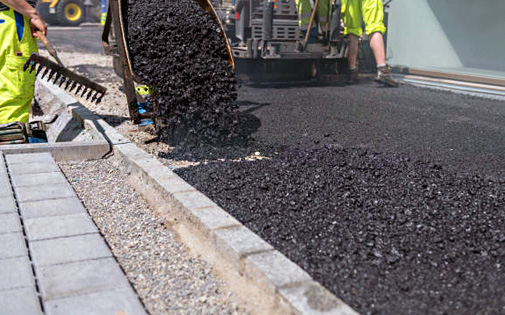
Most road damage starts small: a hairline crack, a polished surface, a shallow rut. Left alone, water gets into the pavement, the base weakens and a cheap repair turns into an expensive reconstruction. Road maintenance is about choosing the right treatment at the right time, before that happens.
This guide explains the most common road maintenance methods, when each one is used, how it is applied and which equipment does the job.
Road maintenance falls into two groups. Preventive maintenance is applied while the road is still in good or fair condition. Crack sealing, chip sealing and micro-surfacing seal the surface, keep water out and slow down ageing. Corrective maintenance repairs damage that has already appeared, such as potholes and broken edges.
Preventive treatments cost far less per square metre than corrective repairs or resurfacing, and they can be repeated at intervals to keep a road in service for many more years. For this reason, road authorities increasingly plan maintenance around the condition of the road rather than waiting for failures.
Cracks are the first entry point for water. Once water reaches the base layer, freeze-thaw cycles and traffic loads quickly widen the cracks and lead to potholes. Sealing cracks early is one of the most cost-effective treatments available.
When to use it: On roads with longitudinal, transverse or reflective cracks while the surrounding pavement is still sound. It is best carried out in spring or autumn, when cracks are moderately open.
How it is done:
Equipment:Asphalt Crack Router and Asphalt Crack Filling Machine
Chip sealing renews the wearing surface of a road. A layer of bitumen or bitumen emulsion is sprayed onto the surface and immediately covered with a single layer of aggregate chips, which are then rolled in. The result is a waterproof surface with restored skid resistance.
When to use it: On low- and medium-traffic roads with a structurally sound base but an aged, cracked or polished surface. It is also widely used as the final surface on rural roads.
How it is done:
The quality of a chip seal depends heavily on applying the right amount of binder. Too little and chips are lost; too much and the binder bleeds through. This is why asphalt distributors with fully automatic proportional control, which keep the rate constant regardless of vehicle speed, are preferred for chip seal work.
Equipment:Asphalt Distributor, Chip Spreader or Dump Truck Chip Spreader. The Combi Chip Spreader sprays binder and spreads chips in a single machine.
Micro-surfacing is a thin cold-applied layer made of polymer-modified bitumen emulsion, fine aggregate, mineral filler, water and additives. The materials are mixed on the machine and spread onto the road in one pass. Slurry seal works on the same principle with a non-polymer emulsion and is used for lighter-duty applications.
When to use it: On roads with surface wear, minor cracking, loss of texture or shallow ruts. Micro-surfacing can also fill ruts and is suitable for high-traffic roads and urban streets, as it can usually be reopened to traffic quickly, depending on weather conditions.
How it is done:
Equipment:Micro-Surfacing / Slurry Paver
Potholes are the most visible form of road damage and a direct safety risk. A durable repair depends on two things: using hot mix asphalt at the right temperature and making sure it bonds properly to the surrounding pavement.
When to use it: As soon as potholes appear. Temporary cold-mix patches are often lost within weeks; a properly compacted hot-mix repair lasts much longer.
How it is done:
The main challenge is keeping the asphalt hot between the plant and the repair site, especially in cold weather or when crews move between many small repairs during the day. An asphalt thermobox keeps hot mix at working temperature for extended periods, so crews can carry out permanent repairs instead of temporary patches.
Equipment:Asphalt Thermobox for hot mix, and the towed VAD-T maintenance distributor for spraying binder before patching.
When a new asphalt layer is laid over an existing road, the two layers must bond. Without a proper tack coat, the new layer can slip, crack or separate under traffic. A thin, even layer of bitumen emulsion is sprayed onto the existing surface just before paving.
When to use it: Before every asphalt overlay and between asphalt layers in new construction.
Equipment:Asphalt Distributor
Sweeping is part of almost every maintenance operation. Dust and loose material on the surface prevent binders from bonding, so roads are swept before chip sealing, micro-surfacing and tack coat applications. After chip sealing, sweeping also removes loose chips that could damage vehicles.
Equipment:Road Sweeper
| Road Condition | Recommended Method | Equipment |
|---|---|---|
| Individual cracks, sound pavement | Crack sealing | Crack router, crack filling machine |
| Aged, polished or finely cracked surface on low- and medium-traffic roads | Chip sealing | Asphalt distributor, chip spreader or combi chip spreader |
| Worn surface, loss of texture, shallow ruts, urban or high-traffic roads | Micro-surfacing / slurry seal | Micro-surfacing / slurry paver |
| Potholes and local failures | Hot-mix pothole repair | Asphalt thermobox, maintenance distributor |
| Before a new asphalt layer | Tack coat | Asphalt distributor |
| Before and after surface treatments | Sweeping | Road sweeper |
Treatments are often combined. A typical preventive programme seals cracks first and applies a chip seal or micro-surfacing a season later. Roads with severe structural damage, such as widespread alligator cracking or deep rutting caused by a weak base, need rehabilitation or reconstruction rather than surface treatments.
Crack sealing is applied to working cracks that open and close with temperature changes; the crack is usually routed first and a flexible sealant is used. Crack filling is applied to wider, more stable cracks and mainly aims to keep water out. Both are carried out with a crack filling machine.
Chip sealing sprays binder and covers it with aggregate chips in separate steps, creating a coarse, skid-resistant surface; it is mainly used on low- and medium-traffic roads. Micro-surfacing lays a pre-mixed, finer layer in one pass, produces a smoother surface, can fill shallow ruts and is better suited to urban and high-traffic roads.
Most failed repairs are caused by asphalt that has cooled before compaction, poor bonding to the edges of the hole, or water left in the hole. Using hot mix kept at the right temperature, cleaning the hole and spraying binder before filling greatly improves durability.
Vimpo has been manufacturing road construction and maintenance machines since 1997, including asphalt distributors, chip spreaders, micro-surfacing pavers, crack sealing machines, asphalt thermoboxes and road sweepers. Tell us about your roads and maintenance plans, and our team will recommend the right equipment.
We have all road construction machines. Find the product you need.
ALL PRODUCTS
Vimpo Maschinen GmbH Gebäude P-F-377 Leopoldstr. 2-8 32051 Herford
+49 1516 8459644
Mail:sales.eu@vimpo.com
Vimpo Machine Pvt. Ltd. (Factory)
Plot No. PAP-160, Village - Shinde, TAL-Khed.Dist- Pune, Chakan phase-2 Maharashtra-410501
+91 6359-818748
Venta-Tech LLC
sale@venta-tech.com
+380671229797 Whatsapp/Telegram
АСТРА
Krasnoshkolnaya Embankment 2, Office 22, 61050 Kharkiv
+380577329505
TREMCO Transport Equipments Manufacturing Company
Sabhan, Block 11, Building 224 Sabhan, Block 9, Building 100
+965 9720 6090
EAST EG ENGINEERING AND SERVICES TECHNOLOGY SAE
30 ST 276 New Maadi, Cairo 11742, Egypt.
Tel: +20 2 2519 3383 |Ext 139 Fax: +20 2 2519 3381

 Vimpo Road Construction MachinesVimpo Makine A.Ş.
